Organic Marketing and Why It’s Important
What is organic marketing?
Organic marketing is a more subtle approach to marketing that prioritizes natural outreach tactics over promotional content and paid advertising. If you have a TikTok account, send email newsletters, or run a blog – you’re practicing organic marketing.
What is (and isn't) organic content?
By creating high-quality content that gives prospective consumers value for low to no cost, organic marketing aims to attract and convert people who find them naturally.
Investing in organic marketing means that you’ll be playing the long game. From growing an audience on your social media to filling your blog with quality, relevant content, organic marketing takes time and consistent effort.
The main goal of organic marketing is to increase brand awareness and build a connection with your audience, whether through educational or entertaining content.
Why is it so important?
Organic marketing encourages an emotional connection between your customers and your brand, which is a major driver of a positive brand experience. Through content that is focused on helping, educating, or entertaining your customers, organic marketing allows you to connect to them without the barrier of needing to sell in your way.
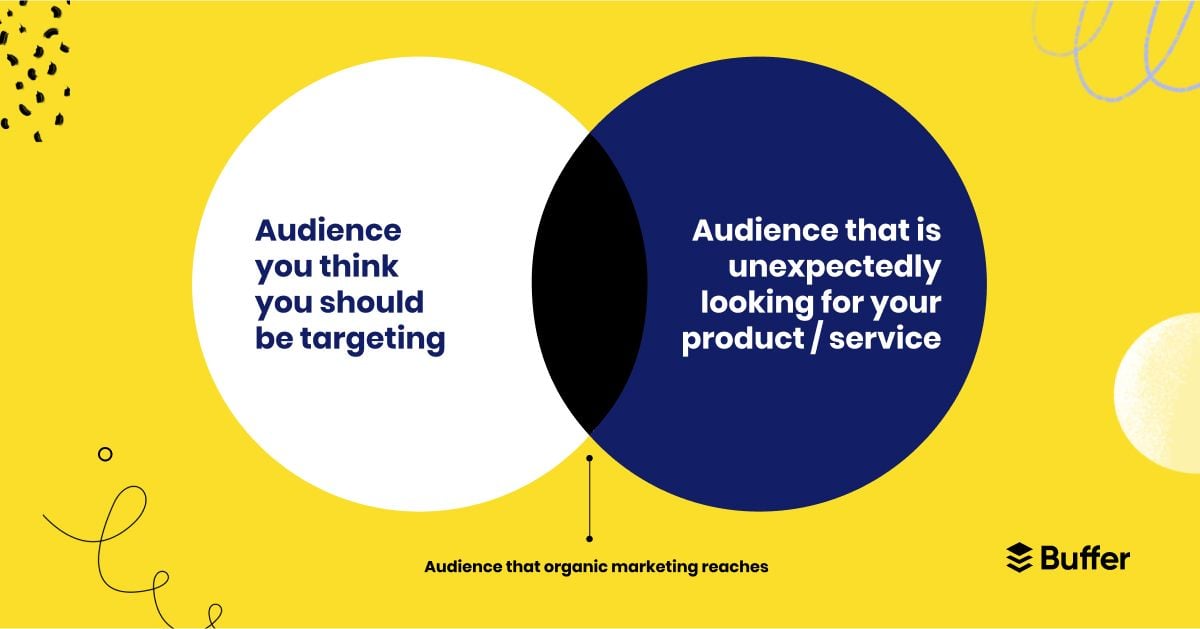
Your research and analytics may have one idea of the audience you should be targeting, but there might be a surprising group of people looking to use your product or service in different ways. By using organic marketing, you can optimize for covering and reaching both.
Effective organic marketing creates permanent traffic sources for your website. It brings customers to your business naturally over time. Organic marketing also convinces search engines that your website is relevant to what your audience is looking for.
Organic marketing also convinces search engines that your website is relevant to what your audience is looking for. Optimizing all your content assets for search engines will improve your discoverability and lead more qualified customers to you.
Once you’ve sorted your organic marketing strategy, you have a permanent way to build brand awareness that requires little extra effort. Effective organic marketing will bring customers to your business naturally over time.
How to get started with organic marketing
You might be doing organic marketing already – that Instagram post? It’s organic marketing. Your new blog post? Organic marketing. The only thing to keep in mind is that it takes time and effort to see results. So if you’re just starting with organic marketing, these are some tactics to try for your business.
- Creating evergreen content: Creating a content bank that can work for you even when you don’t have anything to publish is critical. This is content your audience can discover and learn from at any time, so blog posts, podcasts, and videos fall into this category.
- Set up proper email marketing: With over 4 billion people having an active email address, whether you choose to set up a newsletter like Robinhood Snacks or just send product and business updates, email is one of the best ways to reach your customers.
- Grow your social media: You need to have a presence on a (relevant) social network to reach a broad audience. But more than that, the content you create and share needs to be relevant to your audience and good enough for them to want to reshare it. This means investing in quality photo/videography, using the platform's language (TikTok is irreverent while LinkedIn is formal), among other things. We’ve published tons of content about growing your social media, which you can get the best of here.
- Build a community with your customers: The best way to engage with your community is by staying in touch with your followers. You can do this by replying to their comments and reviews and creating spaces where they can reach you or your team members at any time. Check out this guide to get started building your community.
- Start link building: You can start link building by creating tons of evergreen content and guest posting on other websites. This will improve traffic to your website and bring in more qualified leads for your business. You’ll also be able to show your expertise and be seen as an authority in your niche. Here’s a great guide to help you get started from SEMRush.
Along with implementing different tactics, it’s also essential to coordinate your efforts to see the best results. This means creating and implementing a proper marketing strategy. Here are some ways to improve yours.
- Keep all teams informed of your efforts: Successful organic marketing requires all teams to be aligned around customer needs. So, it’s essential to discover the bottlenecks with content creation, figure out how to get things done faster, and inform leadership where they can help.
- Do your organic marketing in-house: Keep the bulk of your OM efforts in-house — no one understands your business like the people who work with it every day. This survey found that in-house organic efforts drove 12 percent more website traffic than fully-outsourced efforts. However, there may be times when you might need to outsource, and that’s ok. Instead, try to work with professionals who take the time to understand your audience and provide them with all the context they need to create content that targets them.
- Optimize your website and social media: It’s one thing for people to click through to your blog post or social account, and another thing to keep them coming back. Elements like your brand design and style and website structure, or even loading speed are important to attract your audience and get them to reshare your content.
- Make sure your content is easily accessible on mobile: From opening Twitter to listening to a podcast, your customers are most likely accessing content on their phones. To create an effective organic marketing strategy, you need to optimize all your content for mobile devices. This means making sure you get the image dimensions for each platform right and having an accessible website.
- Frequently analyze the performance of your organic marketing efforts: Tracking results is essential to ensure your organic marketing strategy is producing results. It also allows you to see which of your efforts should be scaled and whether your time is wasted in any particular aspect of the strategy.
Keep in mind that even with all the tactics and strategies you try, customers respond best to authentic content that fulfills a need they have. So even if you don’t have a large video team or marketing budget, you can still create valuable content that your audience is excited to engage with and share through organic marketing.
Comments
Post a Comment